THE STORY BEHIND THE NAME36 / 528
Ataülf
Carrer d'Ataülf
THEN & NOWThe map uses the present-day name and location: Carrer d'Ataülf. The original book heading is retained in the reader and search.
A Gothic court in a modern name.
The council of 1835 reached far back for Ataulf’s name. Balaguer turned the commemoration into a dramatic tale of conquest, marriage and a court in Barcelona.
FROM THE VISUAL RECORD
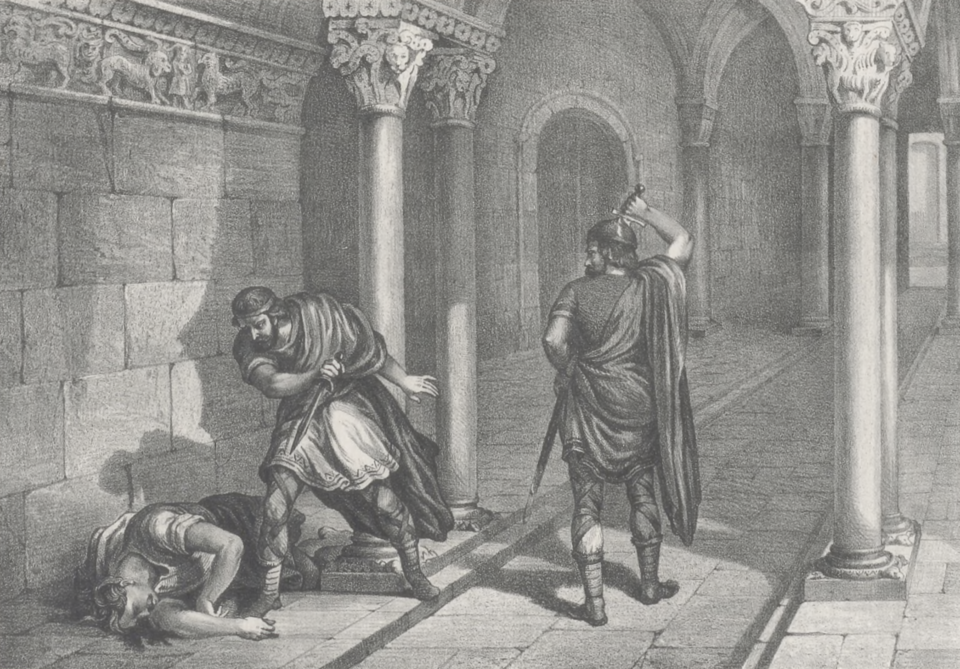
The murder of Ataulf in Barcelona in 415, in a later illustration by Josep Serra i Porsón.
Josep Serra i Porsón · Public domain · Source IN BALAGUER’S TELLING
His account centres on Ataulf and Galla Placidia, presenting political alliances through the language of passionate love and rivalry. He follows the Visigoths from Italy and Narbonne into Barcelona. The intimate motives and romantic scenes belong to his historical storytelling and should not be read as independently documented dialogue or psychology. His central claim is that Ataulf made Barcelona his court after marrying the captive Roman princess Galla Placidia. The king’s assassination there abruptly ends this imagined union of love and empire.
THE BARCELONA CONNECTION
The street makes Barcelona’s role as a royal seat part of an everyday address. Condes de Barcelona offers another, later layer of dynastic memory; Paradís turns towards the city’s ancient material remains. Together they separate changing claims to authority from the buildings and names through which later readers encountered them.
FROM THE ORIGINAL PAGES
“Its present name is modern. The city council gave it in 1835 to commemorate the first Visigothic king who occupied Barcelona and established his court here.
From «Ataúlfo (calle de)» · vol. 1, p. 108 · 1888 · English translation
Read Balaguer’s complete street entry WHY THIS CATEGORY?
People: The street commemorates King Ataulf, who established his court in Barcelona.
A city read through a nineteenth-century book. About our sources

 BARCELONA