THE STORY BEHIND THE NAME344 / 528
Passeig de Joan de Borbó Comte de Barcelona
In the book: Nacional (calle)
THEN & NOWThe map uses the present-day name and location: Passeig de Joan de Borbó Comte de Barcelona. The original book heading is retained in the reader and search.
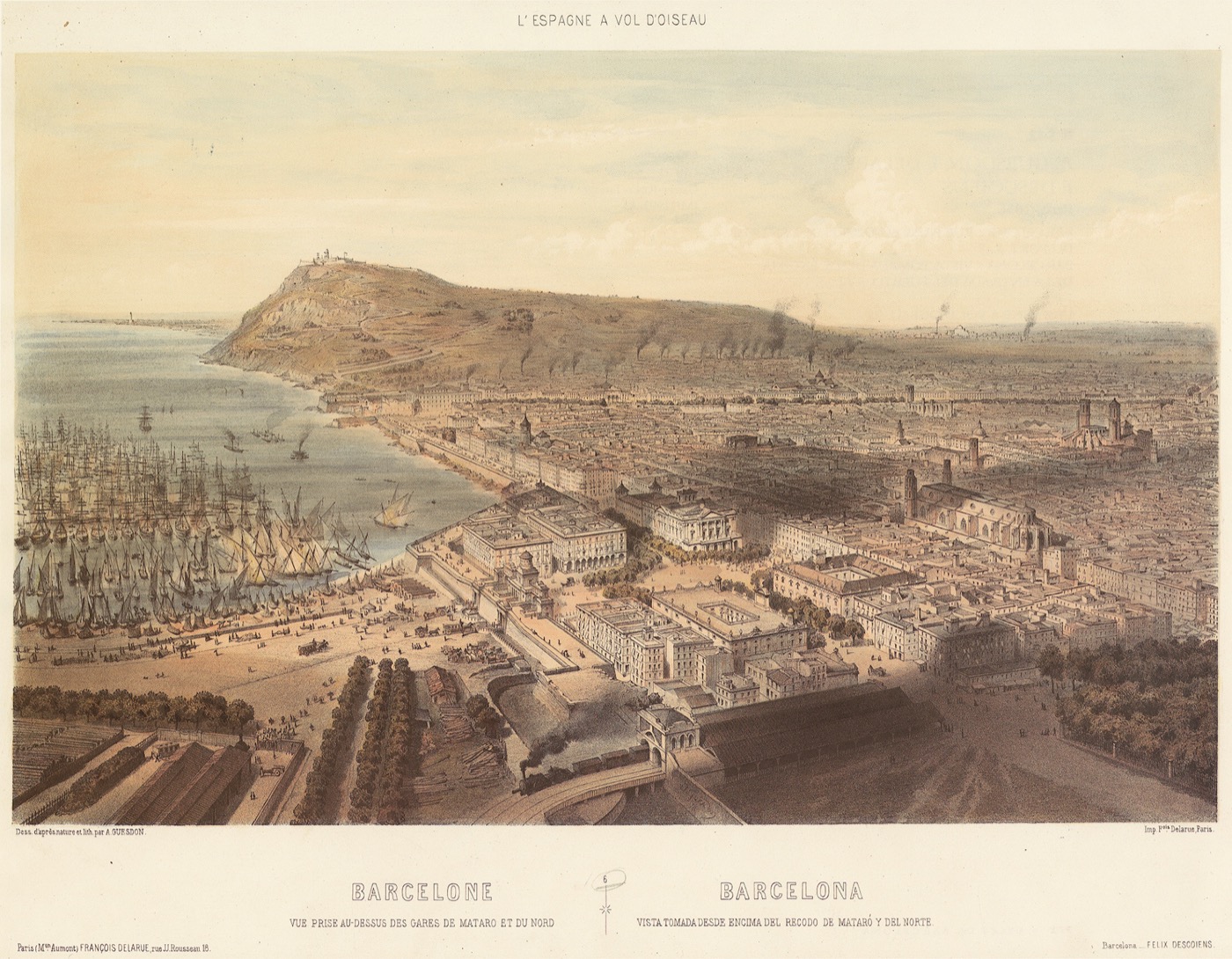
The waterfront road and the making of a harbour
Nacional leads Balaguer from Barceloneta’s quayside to centuries of harbour works.
IN BALAGUER’S TELLING
He begins with a paradox: a major maritime city long lacked a proper mole. The account follows municipal requests, anchorage dues, interrupted construction and later extensions, ending with new works intended to match Barcelona’s commercial importance. In 1438, he says, the city sought Alfonso V’s permission to build. Funding came through anchorage dues on local and foreign ships, tying the harbour’s improvement to its users.
THE BARCELONA CONNECTION
The street faced the harbour rather than merely recalling it from inland. Marina and Comerç extend the author’s argument that trade, shipbuilding and public infrastructure belonged together in the city’s historical identity.
FROM THE ORIGINAL PAGES
“The monarch granted permission and authorised the municipal authorities to levy anchorage dues on both domestic and foreign vessels to finance the work.
From «Nacional (calle)» · vol. 2, p. 376 · 1888 · English translation
Read Balaguer’s complete street entry WHY THIS CATEGORY?
City life: Nacional is an abstract civic designation fitting City life. Balaguer’s harbour history situates the street but does not explain a particular naming act or national institution.
A city read through a nineteenth-century book. About our sources

 BARCELONA