THE STORY BEHIND THE NAME50 / 528
Baluard de Migdia
In the book: Baluarte del Mediodía (calle del)
APPROXIMATE HISTORICAL LOCATIONHistorical position is approximate. The marker indicates the vicinity described in the book, using its street connections and the historical plan as references; the former boundaries have not been reconstructed precisely.
A black flag above the ruins.
The Midday Bastion gave a street its name and Balaguer one of his fiercest memories of 1843. He describes defiance under bombardment with unmistakable sympathy.
FROM THE VISUAL RECORD
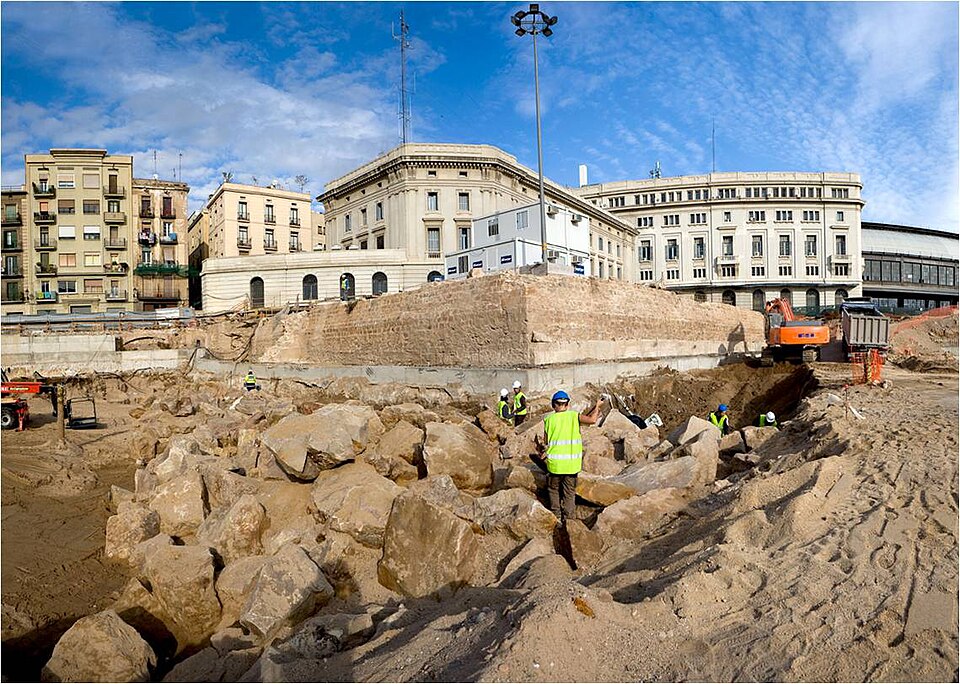
Excavated remains of Barcelona’s Baluard del Migdia, photographed in 2012.
IN BALAGUER’S TELLING
An artillery access road became a street as houses rose behind the bastion. The account then follows the centralist rising, when defenders repeatedly rebuilt parapets under fire from surrounding fortresses. Balaguer calls them patriots; his admiration and the rhetoric of liberty are part of the account’s political viewpoint. This was the 1843 struggle for a Central Junta to direct political change in Spain. The bastion’s black flag, he says, signalled refusal to compromise even under bombardment.
THE BARCELONA CONNECTION
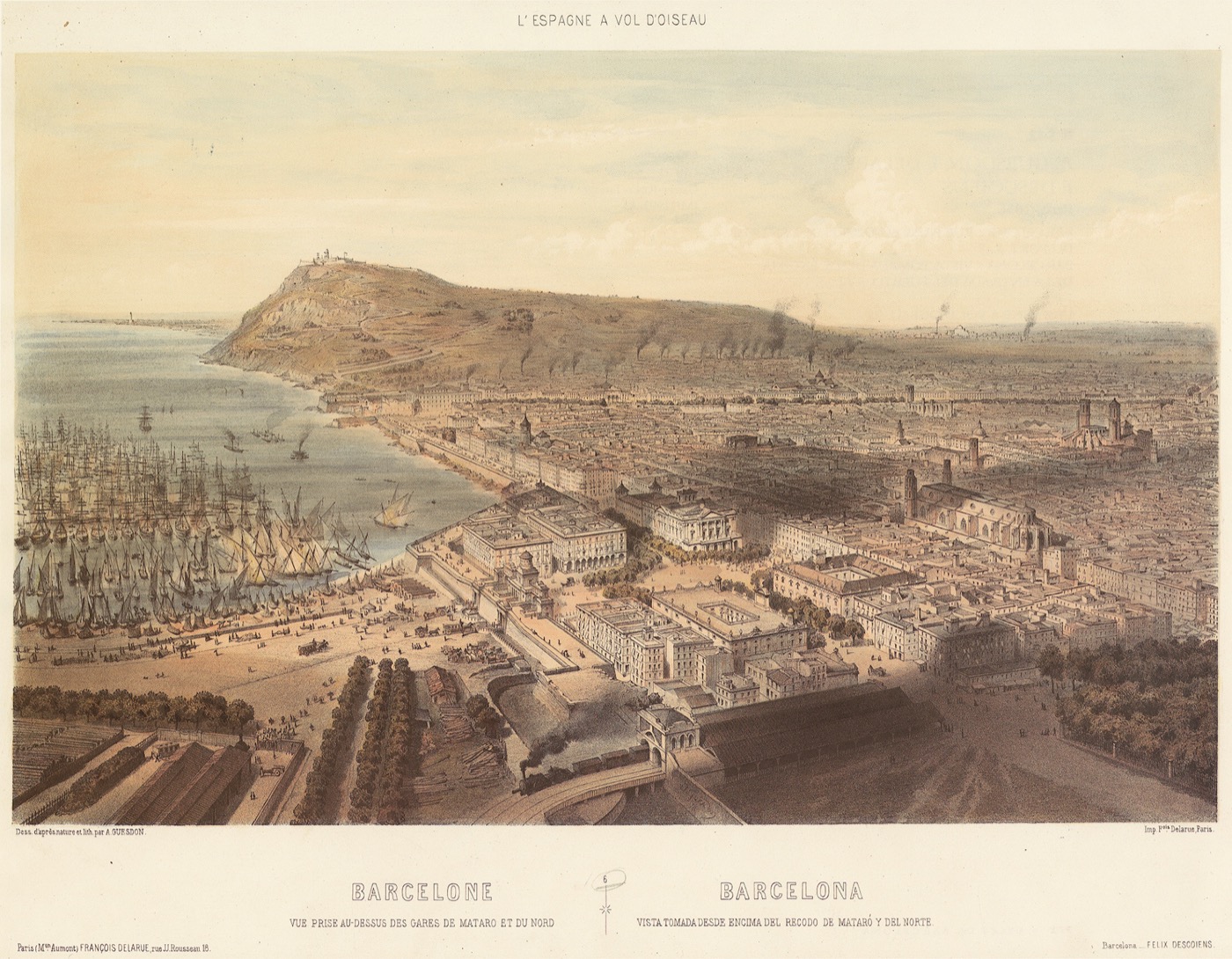
The Citadel and sea-wall stories place the bastion within Barcelona’s fortified waterfront. Its eventual disappearance under new houses adds a final reversal: a position remembered for desperate resistance became part of the residential city.
FROM THE ORIGINAL PAGES
“It soon became a heap of ruins. So incessantly did shot, shells and bombs fall from the forts mentioned that fragments accumulated within minutes. Each night the centralists built improvised parapets of sandbags, wool sacks, quilts and rubble; as fast as they fell, they were rebuilt. Above the blood-stained ruins a black-and-red flag never ceased to fly, a terrible sign of death and destruction.
From «Baluarte del Mediodía (calle del)» · vol. 1, p. 128 · 1888 · English translation
Read Balaguer’s complete street entry WHY THIS CATEGORY?
Places: The street is named for the Midday Bastion, a physical fortified site. The fighting of 1843 is part of its history.
A city read through a nineteenth-century book. About our sources

 BARCELONA