THE STORY BEHIND THE NAME47 / 528
Passeig de Colom
In the book: Bajo Muralla (calle de)
THEN & NOWThe map uses the present-day name and location: Passeig de Colom. The original book heading is retained in the reader and search.
Carts beneath the sea wall.
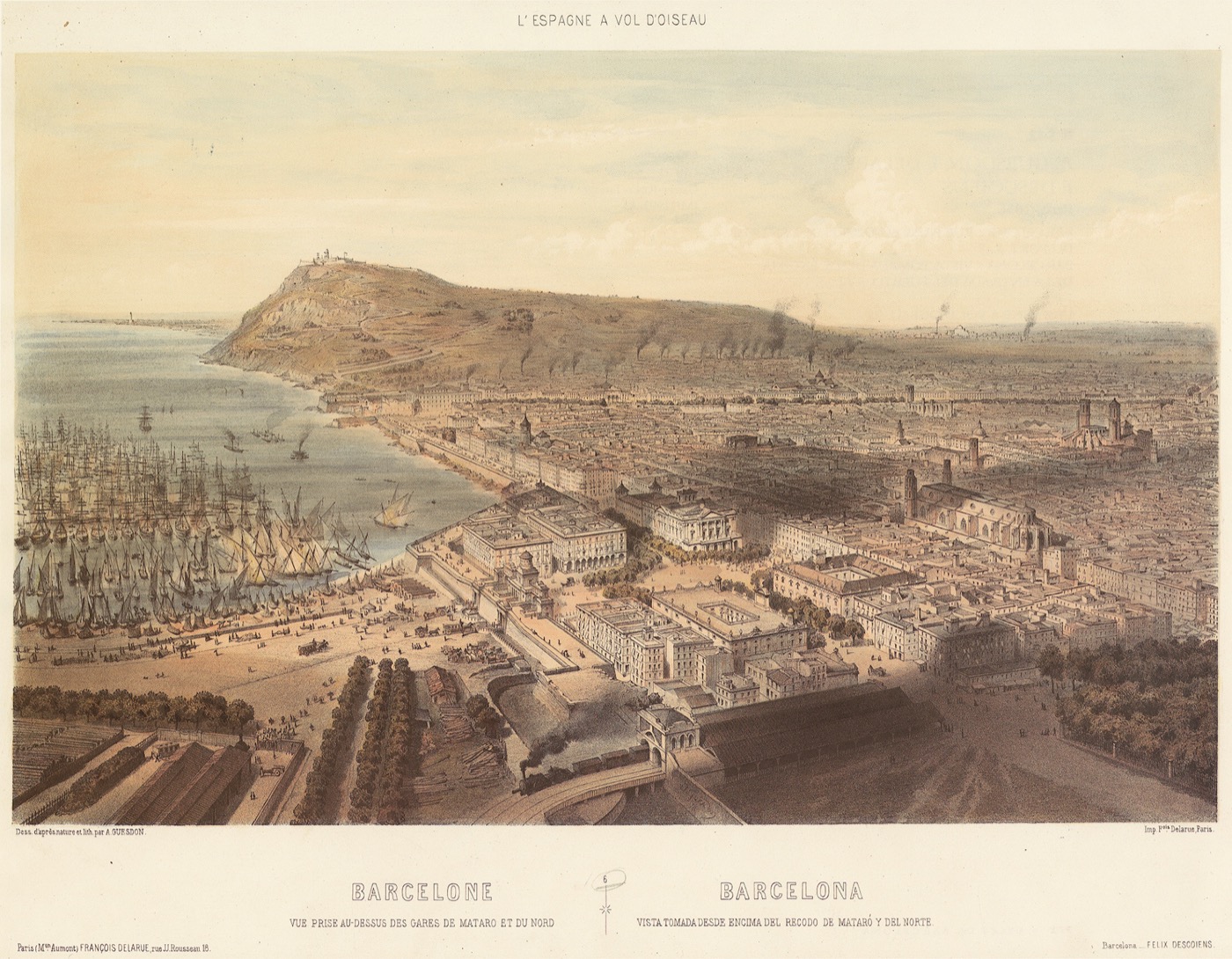
Bajo Muralla was a working waterfront route, busy with freight rather than promenaders. Balaguer also found disputed literary memories and a record of harbour building along it.
IN BALAGUER’S TELLING
He describes carts loaded with coal and wool, then examines a house traditionally associated with Cervantes. He is less convinced that its relief bust represents the writer. A separate inscription recalls the beginning of port works in 1477, giving the street another connection to the sea.
THE BARCELONA CONNECTION
The sea-wall account explains the structure that defined the route. Cervantes continues the literary association, while the freight carts keep this story rooted in the practical movement of goods. Balaguer’s doubts about the bust should accompany any account of the supposed Cervantes house.
FROM THE ORIGINAL PAGES
“A long street runs alongside the sea wall, from Plaça de Sant Sebastià to the Rambla opposite the shipyards. Almost its only traffic consists of carts carrying coal, wool and other goods to and from the port.
From «Bajo Muralla (calle de)» · vol. 1, p. 121 · 1888 · English translation
Read Balaguer’s complete street entry WHY THIS CATEGORY?
Places: The name locates the route beneath the sea wall; the physical place explains the category.
A city read through a nineteenth-century book. About our sources

 BARCELONA