THE STORY BEHIND THE NAME506 / 528
Valldonzella
Carrer de Valldonzella
THEN & NOWThe map uses the present-day name and location: Carrer de Valldonzella. The original book heading is retained in the reader and search.
A royal death in the convent
Valldonsella’s name carries the memory of a moving community of Cistercian nuns. Balaguer makes their convent a stage for royal arrivals, Martin the Humane’s death and the succession crisis that followed.
A VIEW OF THE PLACE
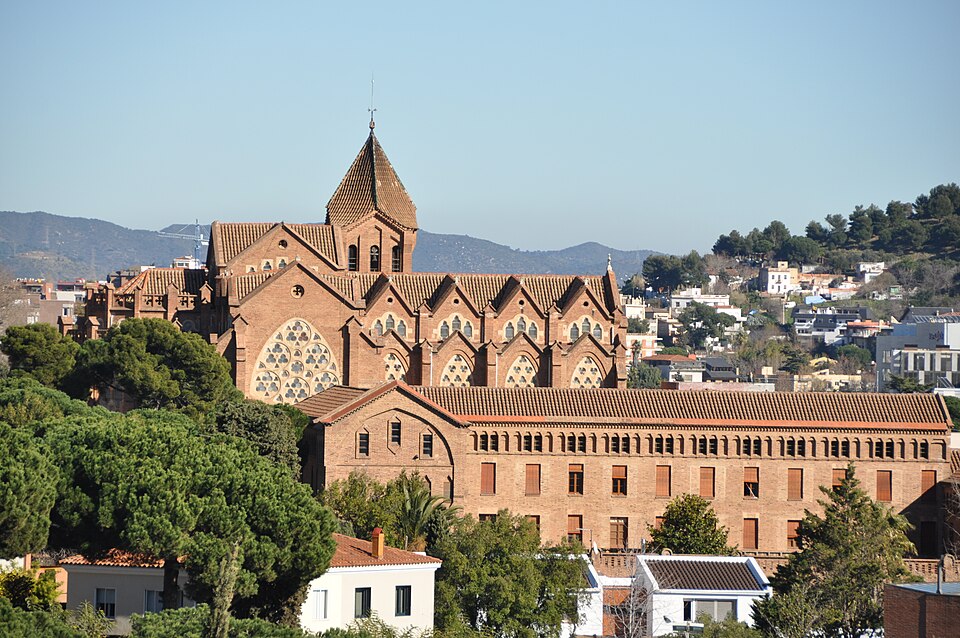
The present Valldonzella monastery, built in 1916–1923. This is the community’s later home, not the vanished building beside the historical street.
Catalan Art & Architecture Gallery (Josep Bracons) from Barcelona, Catalonia · CC BY-SA 2.0 · Source IN BALAGUER’S TELLING
The account follows the community from a rural setting near Vallvidrera to a convent outside Barcelona. War later destroyed that building; the nuns eventually occupied Nazaret inside the walls. Napoleonic demolition and subsequent rebuilding continued the movement. Alongside this institutional history, Balaguer tells a much more speculative, intimate story about Martin’s widow, Margarida de Prades.
THE BARCELONA CONNECTION
Virgen identifies the short street ending at the convent in Balaguer’s city. Comte d’Urgell opens the other side of the succession question, through a dynasty whose last claimant was defeated after Caspe. The convent account joins these large political memories to the repeated displacement of a religious community.
FROM THE ORIGINAL PAGES
“In the prioress’s cell of this convent, Martin the Humane, king of Aragon and count of Barcelona, died on 31 May 1410. In that same cell, beside his deathbed, unfolded all those scenes and dramas of mysterious intrigue that preceded the great events which resulted in the celebrated Parliament of Caspe.
From «Valldonsella (calle de)» · vol. 3, p. 270 · 1888 · English translation
Read Balaguer’s complete street entry WHY THIS CATEGORY?
Institutions: The Cistercian monastery of Valldonzella gives the street its name, despite the community’s successive locations. This explains its Institutions category.
A city read through a nineteenth-century book. About our sources

 BARCELONA