THE STORY BEHIND THE NAME275 / 528
Roger de Llúria
Carrer de Roger de Llúria
13th centuryA fleet’s victories—and its victims
The admiral behind the horizon.
The territories on this map needed ships. This is the name of the admiral Balaguer regarded as one of their greatest commanders.
FROM THE VISUAL RECORD
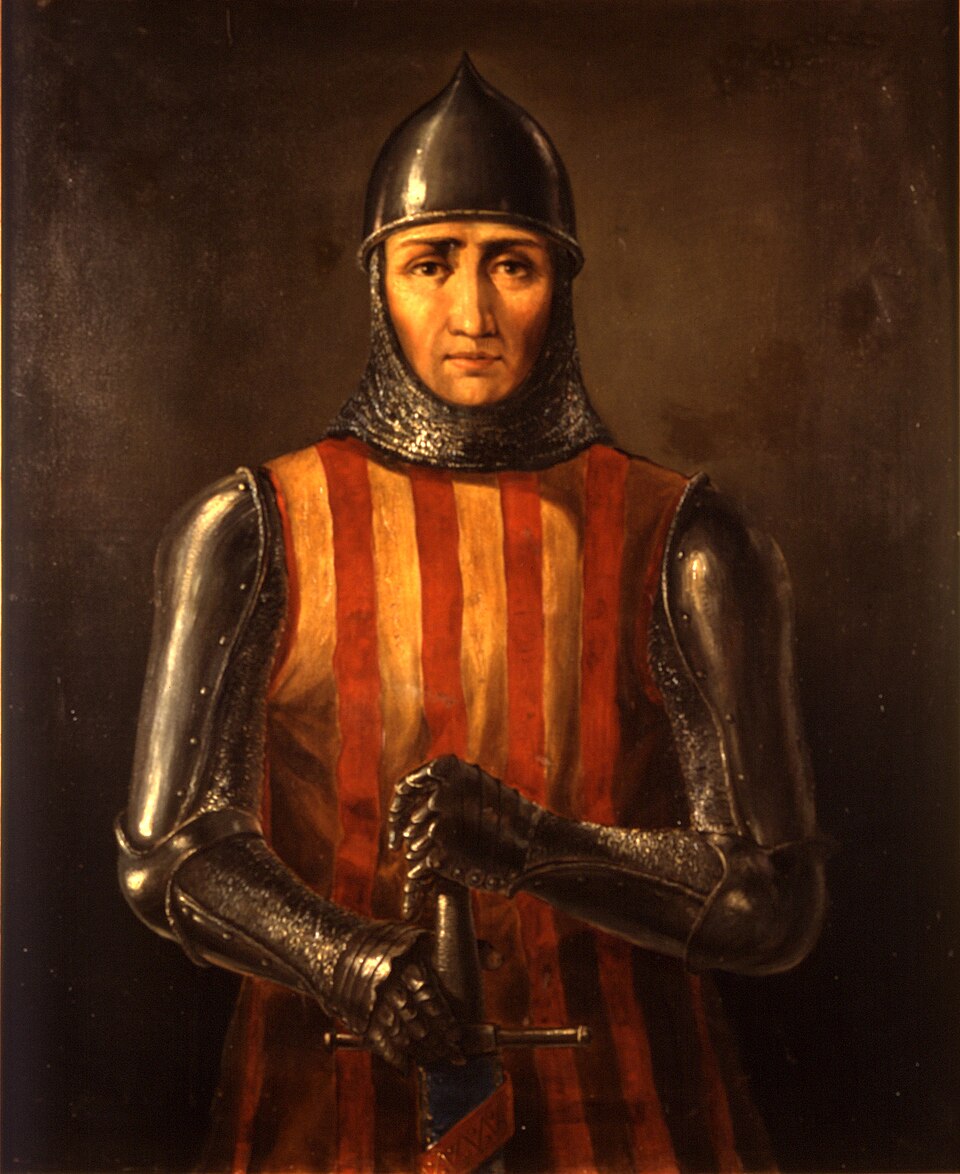
A retrospective portrait of the admiral Roger de Llúria.
Unknown creator · CC0 · Source IN BALAGUER’S TELLING
Balaguer praises Roger de Llúria, the Italian-born admiral who served the Crown of Aragon, and lists his naval victories. His account also describes raids on Djerba, including the seizure and transport of captives. The same entry contains both the glory he celebrates and the violence behind it. He explains how ships blocked escape from Djerba before a night landing; plunder paid for the expedition, and repeated attacks drove the inhabitants to seek terms with their conquerors.
THE BARCELONA CONNECTION
Balaguer says Llúria came to Barcelona after defending the Catalan coast and received from Peter the Great the lordship of Djerba and other lands. The Eixample street commemorates the admiral’s Mediterranean victories. Balaguer’s account also records the people captured in his raids, preserving the human cost alongside the commander’s fame.
FROM THE ORIGINAL PAGES
“It was named in memory of Roger de Llúria, the celebrated seaman and admiral of the Crown of Aragon. He is one of our navy’s most distinguished figures. He flourished under Peter the Great; Italian by origin, he was raised at our court from childhood and became naturalised in our country. He won innumerable battles and engagements, carrying the banner of the red bars triumphantly across the seas.
From «Lauria (calle de)» · vol. 2, p. 223 · 1888 · English translation
Read Balaguer’s complete street entry WHY THIS CATEGORY?
People: The dedication honours admiral Roger de Llúria personally for his Mediterranean campaigns. People follows the commander; Barcelona’s recognition of his service helps explain his place in the naming scheme.
A city read through a nineteenth-century book. About our sources

 BARCELONA