THE STORY BEHIND THE NAME363 / 528
Pla de Palau
In the book: Palacio (plaza de)
THEN & NOWThe map uses the present-day name and location: Pla de Palau. The original book heading is retained in the reader and search.
Barcelona’s ceremonial waterfront square
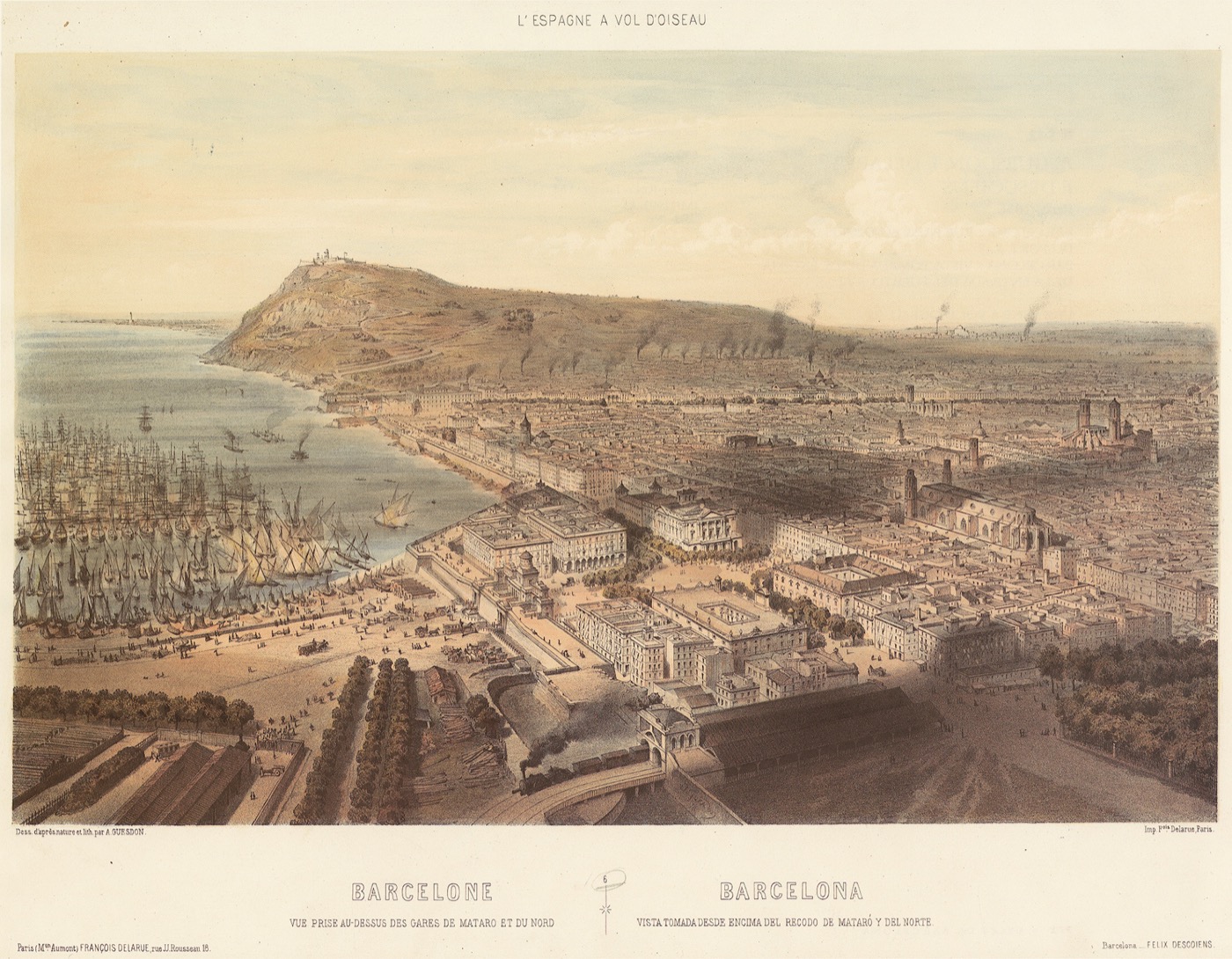
Trade, royal residence and public spectacle gathered at Pla de Palau.
IN BALAGUER’S TELLING
Balaguer centres the account on the Llotja, customs house and royal palace, then traces transformations of buildings and square. His closing scenes follow processions, dances and celebrations into a space he pairs with Sant Jaume as a repository of Barcelona’s history. The palace itself had housed grain and an armoury before adaptation for the viceroy. Balaguer follows this conversion to show how commercial and municipal spaces became a seat of royal authority.
THE BARCELONA CONNECTION
Isabel II, Marquesa and Llauder describe the neighbouring improvements that gave this ceremonial space new approaches. Together they show a waterfront civic centre shaped by commerce, government and the opening of streets.
FROM THE ORIGINAL PAGES
“Three principal buildings stand on this square: the Llotja and customs house, already discussed, and the royal palace that gives it its name.
From «Palacio (plaza de)» · vol. 2, p. 392 · 1888 · English translation
Read Balaguer’s complete street entry WHY THIS CATEGORY?
Institutions: Balaguer expressly says the royal palace gave Pla de Palau its name. Institutions follows that official palace, despite the building’s earlier commercial uses.
A city read through a nineteenth-century book. About our sources

 BARCELONA