THE STORY BEHIND THE NAME174 / 528
Josep Anselm Clavé
Carrer de Josep Anselm Clavé
THEN & NOWThe map uses the present-day name and location: Carrer de Josep Anselm Clavé. The original book heading is retained in the reader and search.
Where the friars went to sleep
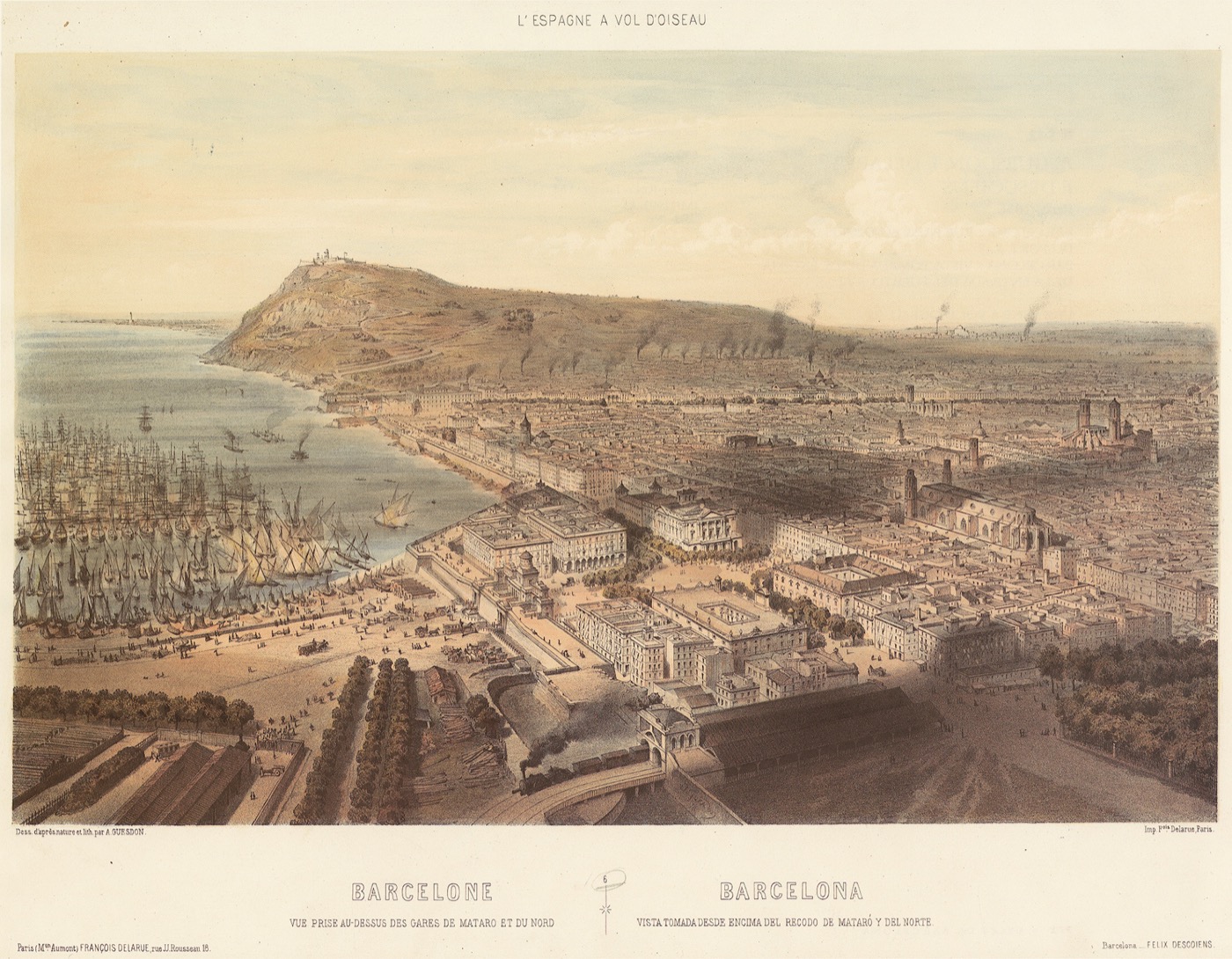
A few houses used for sleeping explain the street’s unusual name. Balaguer turns that modest detail into an immense memorial to the vanished Franciscan convent, its royal tombs, paintings and violent end.
IN BALAGUER’S TELLING
Friars who could not fit into the early convent reportedly lodged here at night. The account then reconstructs San Francisco through foundation traditions, privileges, theological disputes and an imagined pilgrim’s tour of its tombs. Its final movement describes the convent burnings of July 1835. Balaguer narrates the Franciscans’ escape through a drain towards the sea, while identifying a separate scene at San Agustín as something he witnessed as a child.
THE BARCELONA CONNECTION
Duque de Medinaceli describes the public square reshaped after the convent’s demolition, turning the lost religious frontage into a new urban setting. Viladomat follows another survival: the Franciscan painting cycle rescued and moved to the Lonja. These are distinct forms of afterlife for the site, alongside a street name preserving the nightly needs of its early community.
FROM THE ORIGINAL PAGES
“Earlier names were Molí Vell and Muelle Viejo (“Old Wharf”), because it stood beside that wharf. But it began to take its present name because several friars of the San Francisco convent went to sleep in some little houses here: there was no room for them in the convent’s original building, so they took shelter in those houses at night.
From «Dormitorio de San Francisco (calle del)» · vol. 1, p. 384 · 1888 · English translation
Read Balaguer’s complete street entry WHY THIS CATEGORY?
Institutions: The name recalls sleeping quarters used by friars of the Sant Francesc convent. Institutions follows that Franciscan community rather than Saint Francis personally.
A city read through a nineteenth-century book. About our sources

 BARCELONA