THE STORY BEHIND THE NAME161 / 528
Corts Catalanes
Gran Via de les Corts Catalanes
1283The tradition of negotiated law
The king could not rule alone.
Barcelona’s grand avenue remembers an assembly, and an idea: power could be limited through laws agreed with the country’s representatives.
FROM THE VISUAL RECORD
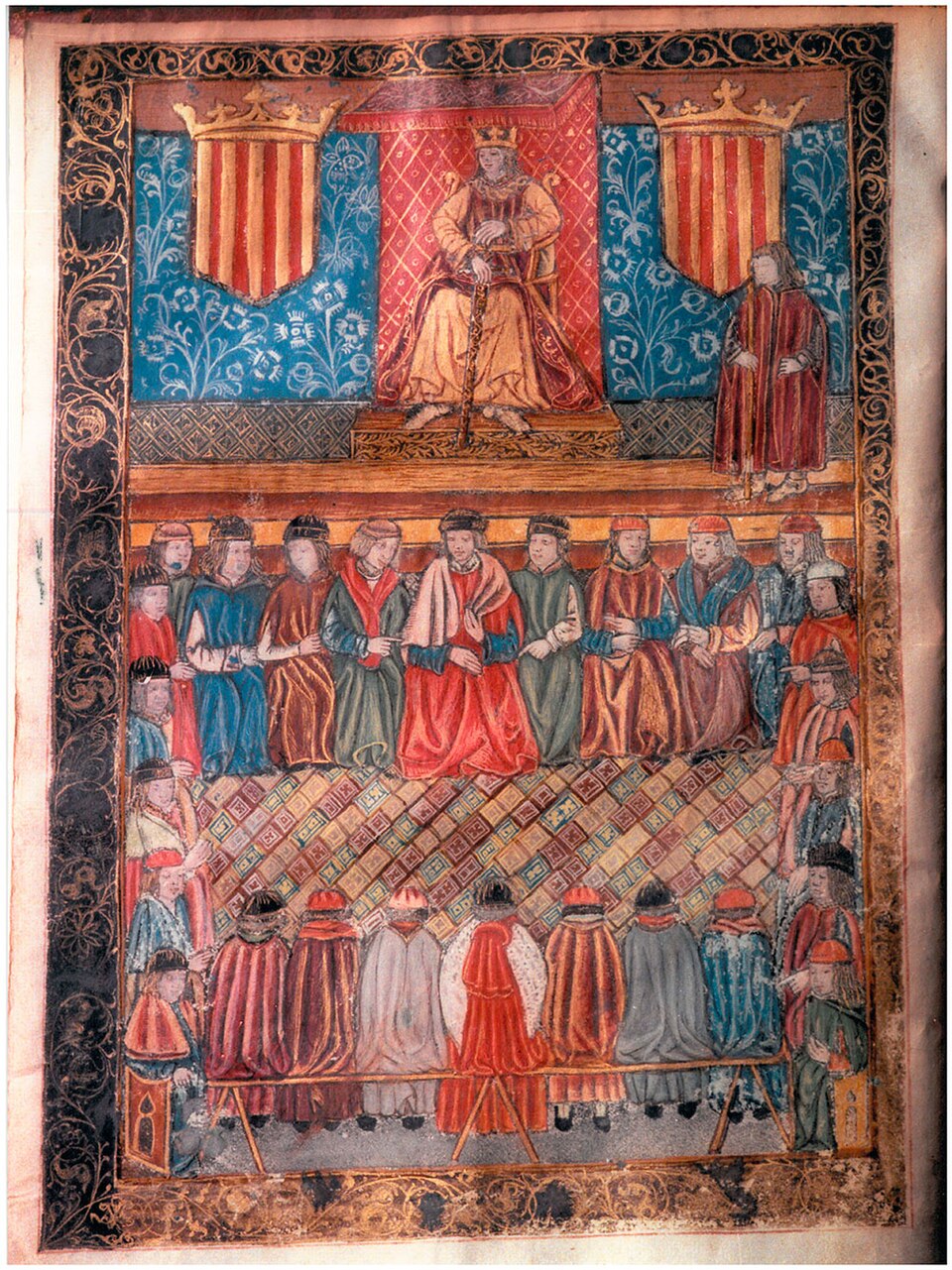
A historical representation of the Catalan Corts, the parliamentary institution commemorated by the name.
Unknown creator · Public domain · Source IN BALAGUER’S TELLING
Balaguer gives one of the most important new roads the name Cortes in perpetual memory of the ancient Catalan assemblies. Drawing on his own writing about constitutional liberty, he stresses laws made by agreement with the monarch and the historical checks on royal authority. His key example is the agreement of 1283: the king could neither make nor repeal laws without the assembly. Grants of taxes, troops and ships likewise required its consent.
THE BARCELONA CONNECTION
The Corts brought the king together with ecclesiastical, noble, and municipal estates. The settlements of 1283 became a landmark in this tradition of negotiated rule. These were privileged estates, rather than a modern democratic electorate, but their memory mattered deeply to a nineteenth-century liberal like Balaguer.
FROM THE ORIGINAL PAGES
“It is to be one of the principal streets of the Eixample, and for that reason was given this name in lasting remembrance of the old Catalan Cortes, which on so many occasions set such lofty examples of selflessness, patriotism and care for the country’s interests.
From «Cortes (calle de las)» · vol. 1, p. 365 · 1888 · English translation
Read Balaguer’s complete street entry WHY THIS CATEGORY?
Institutions: Corts commemorates Catalonia's historic legislative assembly. The governing institution, rather than a particular meeting, determines the theme.
A city read through a nineteenth-century book. About our sources

 BARCELONA